Blog & Demos
Tutorials, case studies, benchmarks, and open-source demos – everything you need to build with small language models.
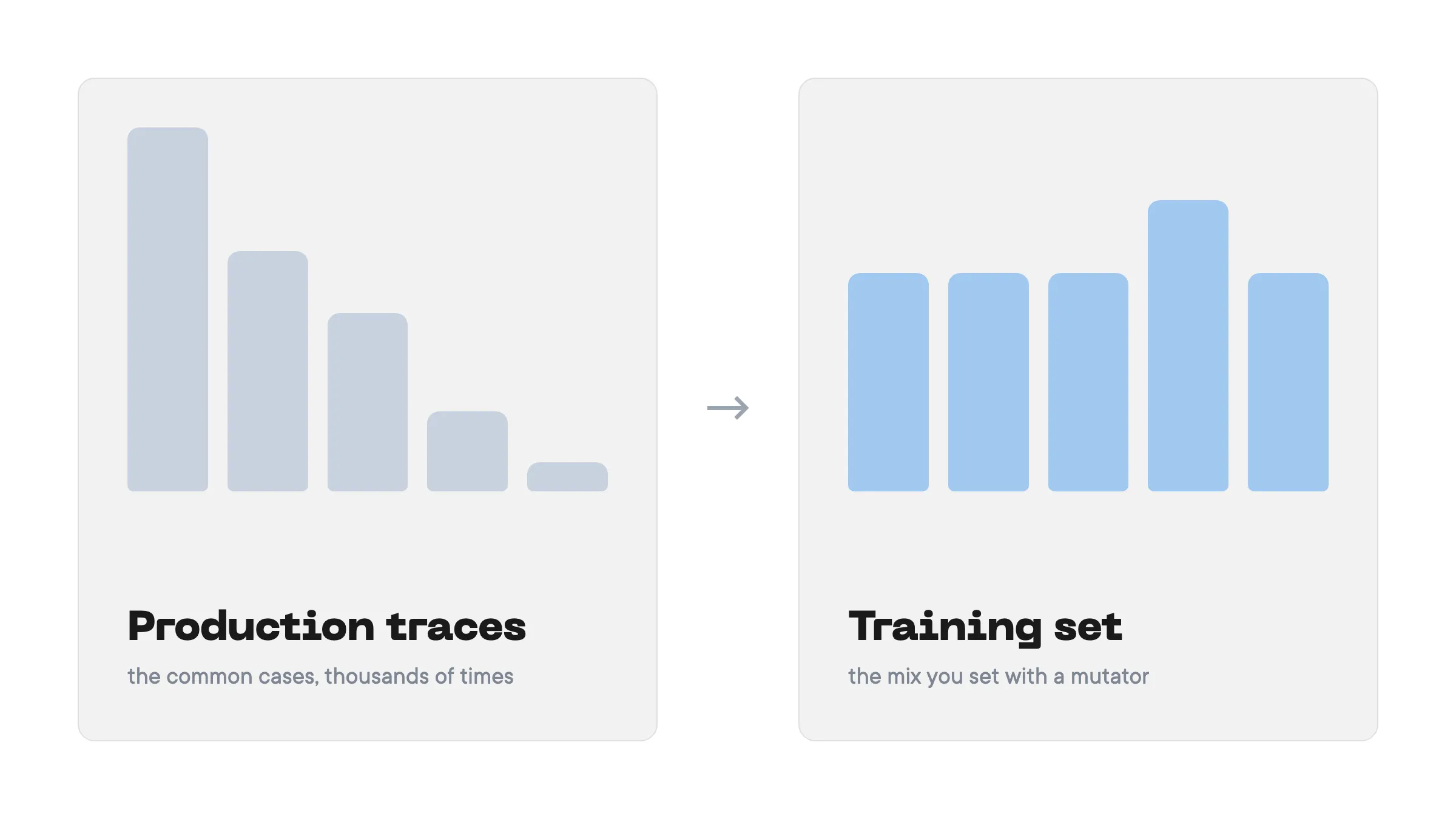
Mutators: set the mix of your synthetic dataset
Production traces over-represent the easy cases. Mutators let you name the situations your synthetic training data should cover and how often each appears, so the student learns the rare cases that matter.
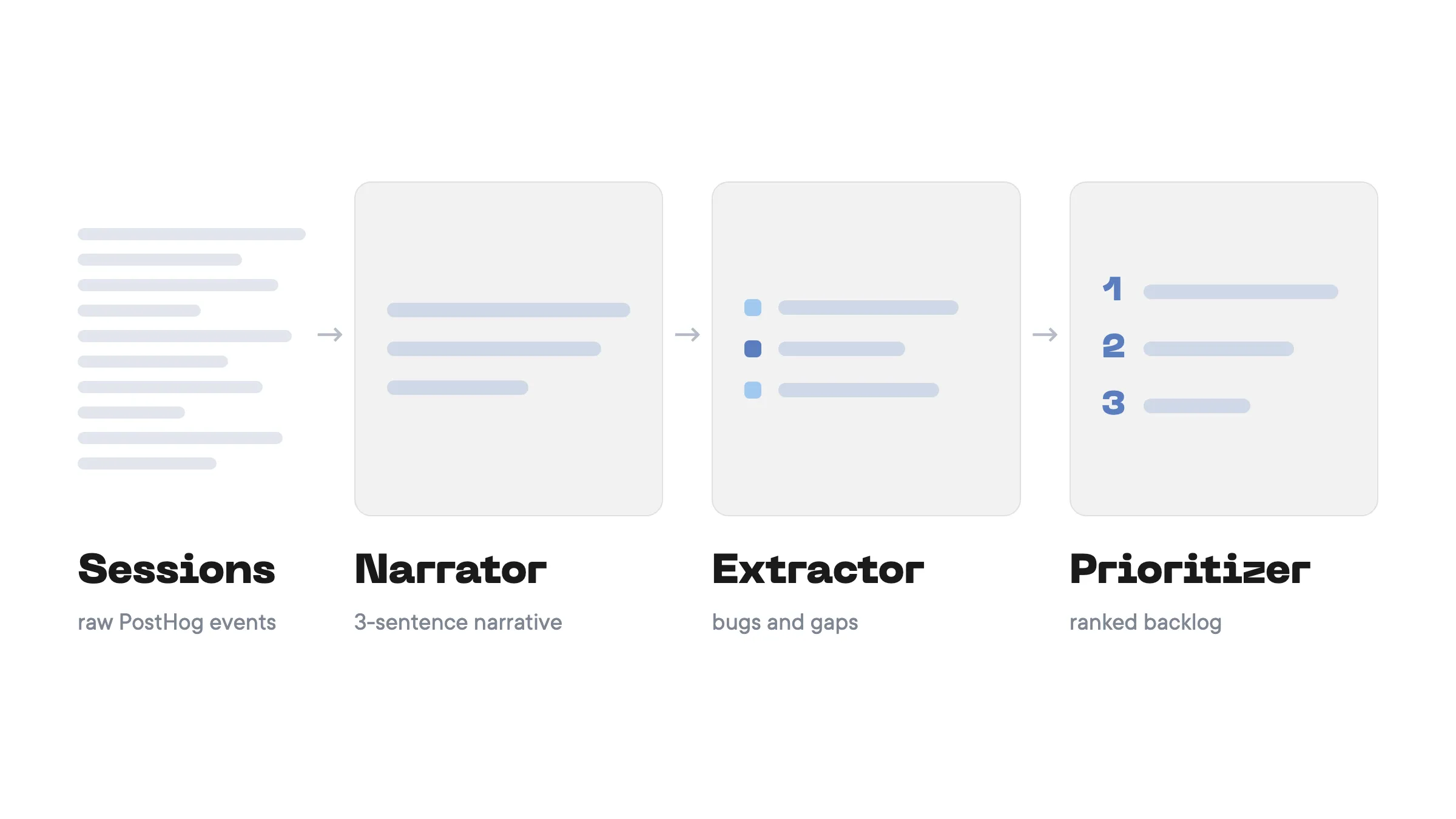
Turn PostHog sessions into product intelligence with SLMs you own
Three fine-tuned small models read raw PostHog sessions and surface prioritized bugs and product gaps. They match their 120B teacher on the held-out sets and run on your own hardware at zero per-call cost.
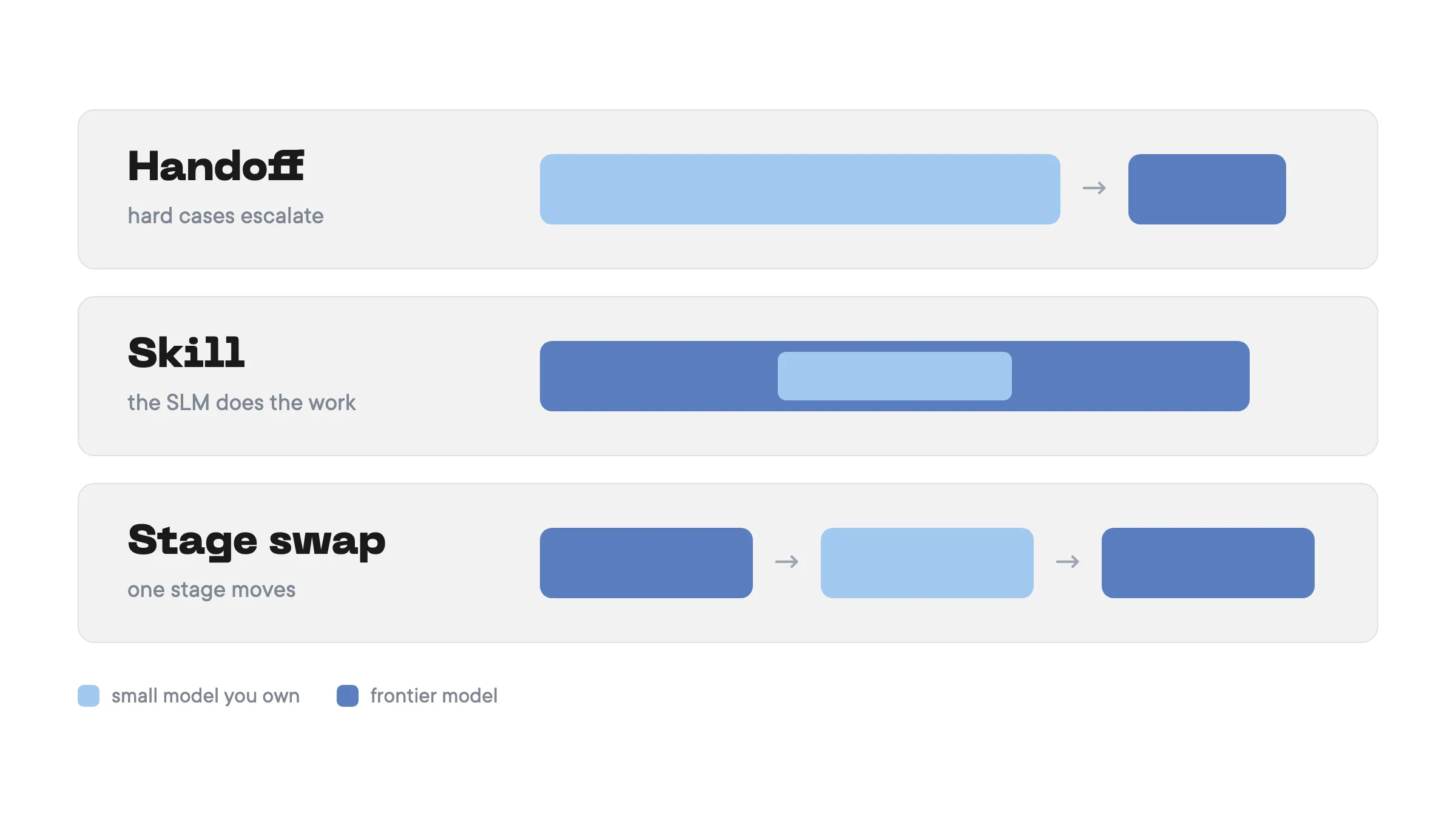
Three ways to put a small model into production
Getting a small model into production comes down to three patterns: handoff, skill, and stage swap. Which one fits is decided by where the repeated narrow work already sits in your system.
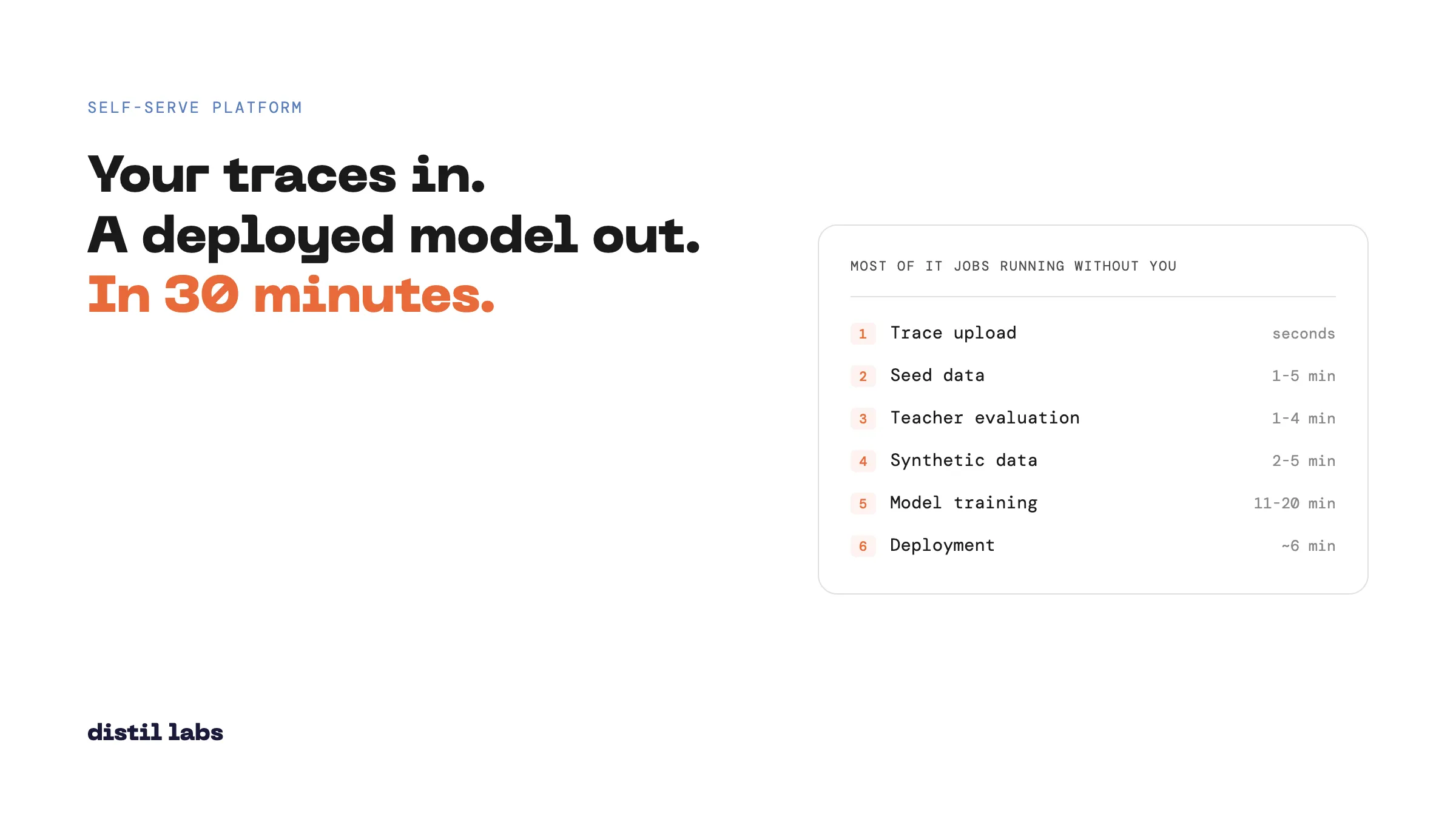
Train and deploy a small model in 30 minutes using the CLI or your coding agent
Training a task-specific small model is six stages, starting from the production traces you already collect. A first model takes about 30 minutes, and most of that is jobs running without you. You drive it from the CLI or hand it to your coding agent.
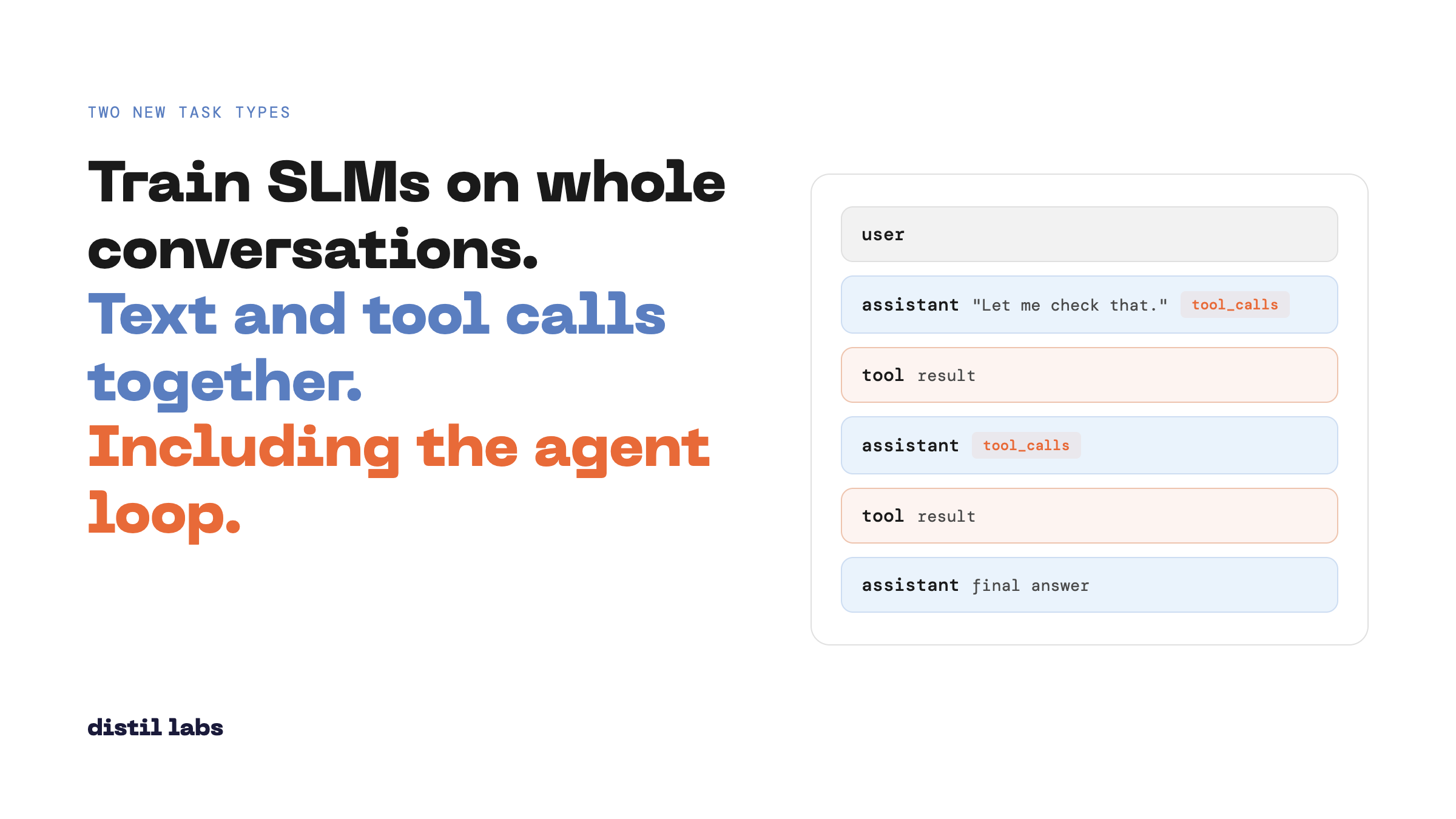
Conversations are now first-class citizens: two new task types for whole-conversation training
Two new task types, chat-completion and chat-completion-agentic, fine-tune small models on complete conversations: text and tool calls together, up to the full agent loop of calling a tool, reading the result, and deciding what to do next.
The best mid-size model to fine-tune was the third-best model to prompt
We added NVIDIA's Nemotron 3.5 Lightning to our mid-size MoE fine-tuning benchmark and re-ran every model two to four times. It finishes first after fine-tuning, clearly beaten on only one of six tasks, despite ranking third before fine-tuning and scoring no better than a coin flip on binary classification untuned.

Gemini 2.5 Flash-Lite retires on a date you don't pick, and a like-for-like swap wastes the migration
Google has announced the retirement of the Gemini 2.5 series, no earlier than October 16, 2026, with the exact date to be set on Google's schedule. Every team running a narrow high-volume job on these models has to re-qualify a replacement whether they want to or not. The default move is another general-purpose workhorse, which means paying to keep the same roughly 80% accuracy on a task that is worth more than that. One education platform spent that same migration on a fine-tuned small model instead and went from 81% to 93% accuracy with inference cost down 68%.
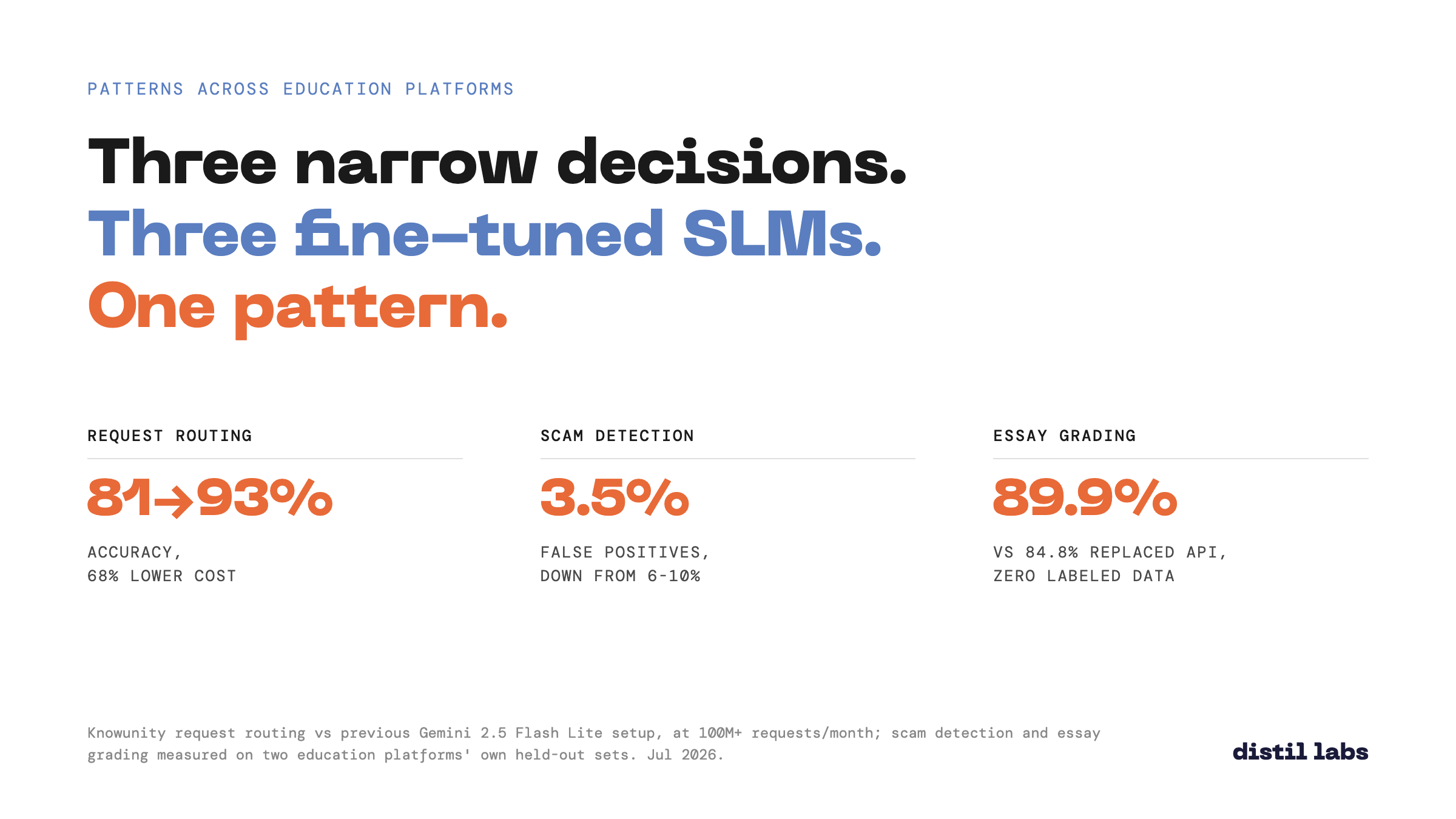
The pattern we keep seeing in edtech: smaller models, better decisions
Three education platforms, three narrow high-volume decisions. Fine-tuned small models matched the frontier models they replaced while cutting inference cost 68% in one case, halving false positives in another, and beating the production grader in a third, trained on nothing but existing logs.
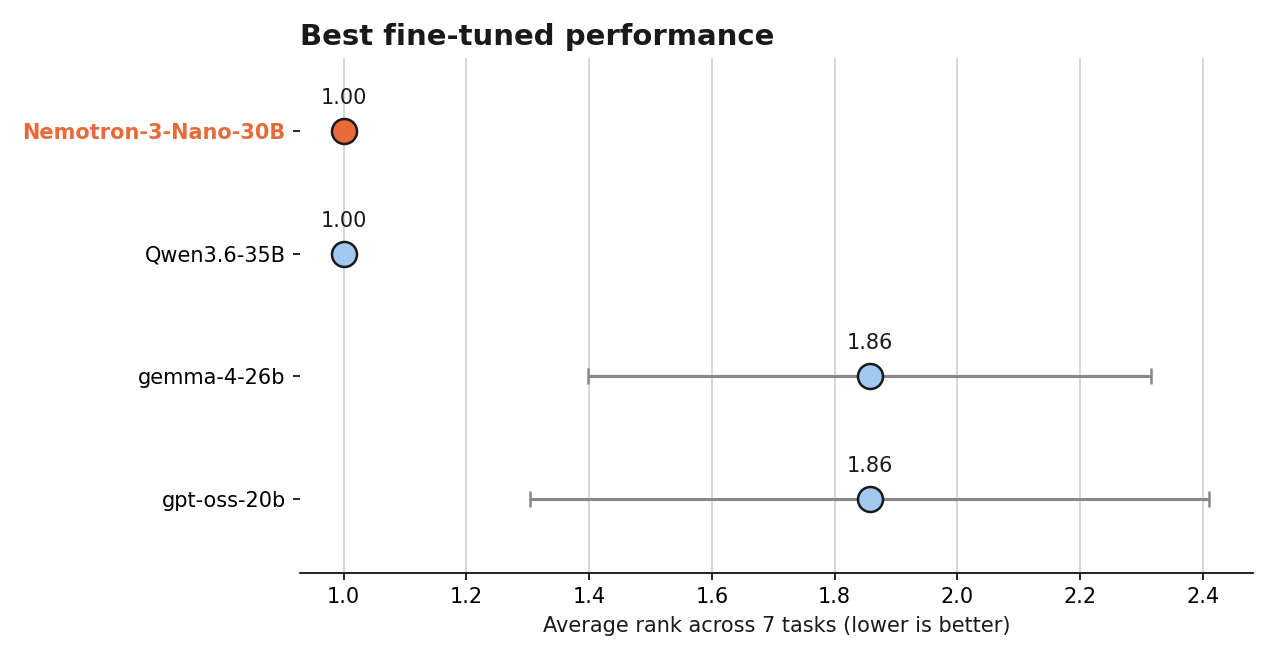
Does base-model accuracy predict fine-tuned performance: a mid-size MoE benchmark
Across four comparable mid-size MoE models on seven tasks, base-model rank does not predict fine-tuned rank: the lowest-ranking base (NVIDIA Nemotron-3-Nano-30B) gains the most and ties for the best, and once tuned it matches its 550B teacher on most tasks.